Tuesday, 10 June 2025

'God's in the house' - transcript of sermon Pentecost 2025


Sermon St Andrew’s Shilton Pentecost Sunday

Acts 2.1-21 & John 8:12-18

Question – what is the nature, purpose and function of a temple and what is one of the key things you would find in a temple?

Now that may appear a strange question on the day when we are celebrating the Feast of Pentecost.

What we know as Pentecost the Jews know as Shavuot occurring fifty days after Passover. It is a harvest festival, when offerings would be brought to the temple in Jerusalem.

So why is the temple important when we celebrate Pentecost.


Well, let me take you on a Biblical journey and show you why and how all of this fits together.

We do not have time to stop off at every point, but I will highlight the key moments in the Scriptures that highlights the importance of the temple.

We begin in Genesis, and it is here we see the nature, purpose and function of a temple, and what is one of the key things you would find in a temple?

Temples are places where God or gods interact with humans, it is a type of liminal space, a type of heaven and earth reality.  And the one common thing you would find in a temple is an image of the god being worshipped.

This is exactly what we find in the opening account in Genesis. God creates a garden and places it in Eden. We are told that God walked about this garden, in the cool of the evening. We are also told that the image of God in this temple space was humans, Adam and Eve.  They are called to be co-regents with God and expand and extend this temple space to cover the whole earth. However, we read that they fail and chose instead to follow a path of self-determination.

This sets of a chain reaction where God’s space, heaven, and our space, earth, become increasingly separated.

Lots more to say but let move swiftly on to Moses and his trip up Mount Sinia. The Divine was nearly always thought of as residing up mountains amongst the clouds. And Moses does indeed enter into a cloud and into the throne room of God. 

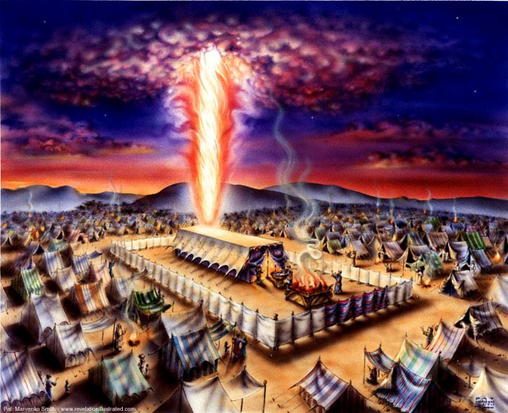
He is then tasked with making an exact replica of all that he has seen which became known as the Tabernacle. This was the heaven and earth space where God could interact with humans and humans could interact with God. Moses becoming the initial intermediary and then Aaron and the tribe of Levi take up that important role.

The tabernacle is developed into Solomon’s temple. And here it is very important to note that at the dedication the Shekinah glory of God fell upon the temple.

From 2 Chronicles 5.14 The priests could not continue their service because of the cloud, for the glorious presence of the LORD filled the Temple of God.

(Which may remind you of Isaiah 6)

This temple was not to last however, and the prophets railed against the People of God, abandoning God’s ways and follow their own path of self-determination.  A common human trait and failing. 

It was destroyed 586 BC by the Babylonians leading to a long period in exile.

A new temple was built by the returning exiles in 516 BC

However, while some rejoiced some of the older men were sad because it didn’t reflect the glory of the first temple.

That said, it was obviously a key moment in the restoration of the sacrificial system and the reinstating of Israel.

What is key for us to grasp is that there is no mention of God’s shekinah glory falling up this second temple as it had upon both the tabernacle and the first temple. This then left the question of whether God was truly present in the second temple. 

Herod the Great began a monumental building project on this temple in 20BC that would continue for 46 years.

And it was a true marvel with the temple precinct being the size of six football pitches that could accommodate a million people.

The walls were 5m thick and made up of enormous stones weighing between 2 and 100 tons (there is even one that weighs 400 tons) with an average stone being about 10 tons. There is no mortar between the stones, and they sit so closely together that not even a piece of paper can fit between them.

Mark 13.2

As Jesus was leaving the temple, one of his disciples said to him, “Look, Teacher! What massive stones! What magnificent buildings!”

 “Do you see all these great buildings?” replied Jesus. “Not one stone here will be left on another; every one will be thrown down.”

That happened in AD70 during the final Jewish war against the Romans.

Before that, Pentecost, the Feast of Shavuot, 50 days after the crucifixion, and many Jewish pilgrims have come to bring their gift to the temple in Jerusalem.

And the small community of Jesus’ followers are gathered in one place.

And the Holy Spirit came down and filled them all with what appeared like tongues of fire coming to rest upon them.

Tongues of fire of speak of God’s presence. Think of Moses at the burning bush and in the pillar of fire that guided the Israelites slaves out of the bondage of slavery into becoming the People of God.

Recall our journey, and in particular remember the Shekinah glory of God falling upon the tabernacle and the First Temple but no mention of the Shekinah glory falling on the Second Temple, leaving the question of whether God was present.

Put all that together and verses like this from the New Testament begin to make sense…

1 Peter 2:5 ‘you also, like living stones, are being built into a spiritual house to be a holy priesthood, offering spiritual sacrifices acceptable to God through Jesus Christ.’

1 Peter 2.9 But you are a chosen people, a royal priesthood, a holy nation, God’s special possession, that you may declare the praises of him who called you out of darkness into his wonderful light.

Acts 17:24 ‘The God who made the world and everything in it is the Lord of heaven and earth and does not live in temples made by human hands.’, However, the Most High doesn’t live in houses built by human hands. 

Jesus considered the temple in Jerusalem as corrupt and railed against it in what we know of as ‘the cleansing of the temple.’

He was challenged by the authorities…

On account of this, the Jews demanded, “What sign can You show us to prove Your authority to do these things?” Jesus answered, “Destroy this temple, and in three days I will raise it up again.” “This temple took forty-six years to build,” the Jews replied, “and You are going to raise it up in three days?

Jesus was the temple that was made without human hands.

Jesus is the heaven and earth space bringing together God and humans.

And now, beginning at Pentecost, Jesus’ disciple are also temples

1 Corinthians 6:19-20 Do you not know that your bodies are temples of the Holy Spirit, who is in you, whom you have received from God? You are not your own; you were bought at a price. Therefore, honour God with your bodies.

Wherever you go, whatever you do, as a disciple of Jesus, filled with the Spirit, we are called to be dispersed mini mobile temples. That heaven and earth reality, the Kingdom of God come upon earth.

That is our high calling and one we can only fulfil by being filled with God’s Spirit. Choosing to seek after God’s will and way.  

We are to be those who through our lives of love and service and obedience to God bear witness to God’s original intent that began with the temple space in the Garden in Eden. This will come to completion as spoken of in Revelation 21. When heaven descends to earth and once more and forever heaven and earth are conjoined. This is portrayed the beautiful imagery of a wedding banquet to which all are invited.  


And on that I am reminded of a story Jesus told about king holding a wedding banquet for his son and inviting everyone from the highways and byways and then this dire warning by way of conclusion.

But when the king came in to see the guests, he spotted a man who was not dressed in wedding clothes. ‘Friend,’ he asked, ‘how did you get in here without wedding clothes?’ But the man was speechless. Then the king told the servants, ‘Tie him hand and foot, and throw him into the outer darkness, where there will be weeping and gnashing of teeth

There are plenty of stories and warnings like this throughout Scripture.

Therefore, on this day when we celebrate the Feast of Pentecost let us ensure we are clothed with the robe of righteousness that Jesus offers us. Let us invite the Holy Spirit to come and to fill us afresh so that we might radiate God’s wonderful glory out into the world. 

When Moses came down the mountain after his encounter with God his face shone so brightly he had to cover it with a veil.

From 2 Corinthians 3.18 we read…

And we all, who with unveiled faces contemplate the Lord’s glory, are being transformed into his image with ever-increasing glory, which comes from the Lord, who is the Spirit.

Let us pray.

Heavenly Father, thank You for Your written Word and the glories it contains. Help us not to become too familiar with its truth that we become complacent. Help us to read and study your Word with expectation and a deep-seated sense of awe. May we increasingly see the beauty of Jesus radiating from its pages, and we pray that as we gaze on His unveiled loveliness, we too will start to be transformed from glory to glory. We pray in Jesus' name, AMEN.


Come Lord Jesus and send the Fire....

 https://youtu.be/6qydwzaeVa0?si=7EYOY64Om8jRsFKb


Sunday, 8 June 2025

‘Let me tell you a story’ - Weekly Reflection 8th June 2025

Once upon a time a beautiful lady was travelling in a magnificent carriage drawn by four horses. As they travelled along they came upon a young girl by the side of the road who was in some obvious distress. She was beaten, bloodied and bruised.  The beautiful lady stopped the carriage and had the coachman pick the girl up and carefully put inside the carriage. The beautiful lady cleaned her wounds and tidied her up as best she could and then gave her some warm soup from the hay box to drink. The young girl fell asleep wrapped in a warm blanket, and on they travelled. Eventually the young girl woke up and they began to talk. The beautiful lady asked how it had come to pass that the young girl found herself by the side of the road in such a state.  She said that her name was Truth and that she had been in the village near to where they found her. She had been in the village for a few days and was trying to get the people of the village to understand the importance of truth.  But they didn’t like what she was saying and the truth she was telling around the village. One day they said they had enough of her and all this telling the truth nonsense. They tied her onto the back of donkey and drove her out of the village throwing rocks and stones as she went. She had fallen off where they had found her. The beautiful lady listened very carefully.  And then said, well my name is Story, and from now on we will work together. And so it was, they travelled the world with Story carrying Truth.

And still today Truth is carried by Story.

We are a storied people, not just Christians, but as human beings. We all live by a story, or maybe several stories. These stories shape our lives and guide our decisions, what we do and what we will not do. Some of the stories we live by are very formalised and maybe part of our community. Others, maybe a wide range and mixture of stories that shape our beliefs and what we deem truth to be.

On this the Feast of Pentecost I have been reflecting once again on the story the Scriptures tell us. To borrow the strap line from the Bible Project, ‘The Bible is a unified story that leads to Jesus.’


The story of Pentecost begins with the opening account of creation with God creating a ‘temple space’ introduced as the Garden in Eden. A temple space is a place where God and humans can interact, an earth and heaven reality, a liminal space. The first human couple are charged with the flourishing of this temple space to expand and extend it across all the earth.  Except the story goes on to tell us that the first human pair disobey and choose to follow their own path of self-determination. This leads to an increased separation between God’s space, heaven and our space, earth.  

The story continues with God seeking to create further temple spaces. Notably after Moses encounters God and enters the throne room of God on Mount Sinai. He is charged with making a mobile replica of God’s throne room that becomes the tabernacle.  The tabernacle is eventually replaced by the first temple. And here, linking in with our Pentecost celebration, we see the shekinah glory of God descend, so much so that the priest were unable to minister  because of the power of God’s glorious presence. (2 Chron 4.14)


But all was not well and despite having God’s presence with them in the Temple the Israelites fail to follow all the way of God and instead, like Adam and Eve chose their own path of self-determination.

In 586BC the Babylonians come and destroy that Temple and carry the Israelites off into exile.

In 516BC they return from exile and the building of the second temple begins. Some are delighted at this reinstating of the sacrificial system, of having their temple back. However, some are sad because it isn’t as glorious as the first temple.  Moreover, there is no mention of God’s presence falling upon this second temple and there is no Ark of the Covenant.

The question remains therefore, is God present, is this truly an earth heaven space, a place of interaction between God and humans?

In 20BC Herod the Great begins a massive rebuilding project that would take 46 years to complete. The second temple of Herod the Great was huge, the temple precinct the size of six football pitches and able to accommodate a million people.

Jesus’ disciples were certainly impressed, look master, they said one day, what a beautiful building and what marvellous stones.  Jesus’ response, “you see all of this, these stones and this building, there is coming a time when not one stone will be left standing up on another.”  (Matthew 24)

On another occasion Jesus made it clear that he considered himself to be the temple space, the earth heaven reality.

“Destroy this temple and in three days I will raise it up again.’  (John 2.19)

It had long been prophesied and spoken about that God does not live in a temple made with human hands. Because human hands are steeped in sin and blood. (Cf.1 Chronicles 22.8) Jesus is the new temple not made with human hands.

And what do we see at Pentecost when Jews from many nations had gathered in Jerusalem to celebrate Shavuot, a harvest festival, bringing offerings to God in the temple, 50 days after Jesus' death and resurection.

We see the disciple gathered and earnest in prayer.  And the presence of God falls, symbolised by fire, like Moses at the burning bush, like the presence of God leading the Israelites through the dessert, like the fire that fell upon the first temple when it was dedicated. And now, this Holy Fire falls upon the disciples who become marked out as mini mobile temples charged with the same commission as Adam and Eve, to be a nation of priest, to bring in God’s good order. This is an inaugurated eschatology. The beginning of the end and not yet the end. That end will come as spoken of in Revelation 21 when heaven comes down to earth and the faithful are raised to a new resurrected life.

The fire signifies God’s presence, signifies God’s power, residing in you and me and our becoming mini mobile temples.  

“Do you not know that your bodies are temples of the Holy Spirit, who is in you, whom you have received from God? You are not your own…”  1 Corinthians 6.19

This is our story, the story that we live by and the story that informs our every waking moment as we seek to live out the reality of being God’s living presence upon earth. Our story that we invite others to embrace so that they may make it their own story and to see their lives transformed.

“And we all, who with unveiled faces contemplate the Lord’s glory, are being transformed into his image with ever-increasing glory, which comes from the Lord, who is the Spirit.” 2 Corinthians 3.18

And this is a great story, because it transforms lives and brings hope into our confused world. 

Know The Story, live The Story and tell the Story because this Story carries The Truth!


And follow this link to learn more about the importance of Pentecost…

What Is Pentecost? And Why Is It Important?


Sunday, 1 June 2025

'Beam me up Scotty' - Weekly Reflection 1st June 2025

If you were to get a coin out of your pocket or purse the chances are it will have on it an effigy of Queen Elizabeth11.  This is in much the same way that I remember as a child, coins bearing the image of the Queen’s father, King George V1. Many of our coins haven’t made the transition to bear the image of King Charles 111.

In the ancient world, the world around the time of Jesus, coins and their image played an important role. They were the medium of the time to show you who was in control often with the image of the ruler along with an inscription that said something about them.

When Jesus asked for a coin (note he asked for one, intimating that he didn’t have one) he asked whose image was on the coin and what was the inscription.

The image was that of the Emperor Tiberius and the inscription declared him to be a hight priest and the son of the divine Augustus.

On Thursday last the Church celebrated one of the most important Feasts, yet sadly often not celebrated and very often misunderstood largely because of artistic imagery taking a literal interpretation of Scripture.

The Feast of the Ascension is crucial when properly viewed to gain an understanding of what the whole Biblical narrative is saying.

Given the cosmological understanding in the ancient world the overall thinking was that God/s lived on mountains that reached into the clouds. (Mount Olympus) In fact, the old English word for cloud was first used for a mass of rock or earth, a hill. It was from the 13th century onwards that the idea of what we now know and think of as clouds developed.   

 Acts 1.9 ‘After he said this, he was taken up before their very eyes, and a cloud hid him from their sight.’

We read on that the ‘Men of Galilee’ (presumably Jesus’ disciples) were gazing into heaven.  Our natural assumption is that this means they were gazing, heavenwards’ – looking up into the sky.

Read that text carefully and it doesn’t say that they were looking upwards, but to ‘heaven.’

Taking that quite literally, and with a limited cosmological understanding before flight, before rockets, before we have explored space, artist and others began to assume that ‘heaven’ acquainted with somewhere up in the clouds. This gave rise to artists creating picture of Jesus’ ascension in a ‘beam me up Scotty’ fashion (Captain Kirk never said that by the way!) Thus, heaven began to be thought of as up above the clouds where God reigned and ruled.


‘There's a home for little children above the bright blue sky,’  Albert Midlane (1859)

A further development was the embracing of the Platonic concept of the soul as a separate entity from the body, in ‘Christian terms’, the spiritual over the physical. This in turn leads to the idea that the aim, goal and purpose is to ‘escape’ from the shackles, toil and tribulations of this earth bound life and ascend into the heavens to live with Jesus for ever.  

Into this mix is added an evangelistic fervour that there is only one way to ensure you can gain access to the life to come, to eternal life, to life with Jesus in heaven. Our ‘sins’ make us earth tied, and hell bound.  Jesus offers a way out of this dilemma, the only way out.

However, this is not Biblical, and it is certainly not in any way shape or form Jewish thinking, then or now, remembering Jesus was a Jew as were his first followers.

If we try and reject the up language as referring to going into clouds or something vertical and replace it with the idea of ascending to a throne, like we witnessed King Charles do, then we begin to get closer to a Hebrew and Scriptural viewpoint.

“At that time people will see the Son of Man coming in clouds with great power and glory.” Mark 13.26

This verse and the surrounding text has been read with reference to Jesus’ second coming and if we have our ‘ticket’ and we are still on earth, then we will be taken up into heaven to be with Jesus for ever.

However, in Daniel 7.13 we read, “In my vision at night I looked, and there before me was one like a son of man, coming with the clouds of heaven. He approached the Ancient of Days and was led into his presence.”

This is the Ascension of Jesus, coming into heaven, ascending to the throne, being given all authority on heaven and earth. (Matthew 28. 18)

Put aside for a moment the language up and down, clouds and heaven. Think instead of God’s sphere and our sphere.  The origin stories of Genesis tell us that both spheres overlapped, and that God walked about both spheres.

‘Then the man and his wife heard the sound of the LORD God as he was walking in the garden in the cool of the day, and they hid from the LORD God among the trees of the garden.’  Genesis 3.8

The story also tells us that Adam and Eve choose a path of self determination and set in motion a chain of events that would lead to God’s sphere and our sphere becoming separated.

We then have several stories that talk about God seeking to create an overlap between the two spheres, a liminal sphere.

Significantly this was the tabernacle and then the temple, places that became heaven and earth spheres combined. Places where humans could encounter God and God could interact with earth and with humans and in one supreme example of a human who lived in both spheres, we know him as the Son of Man, Jesus.

Aligning our lives with Him, inviting the indwelling Holy Spirit into our lives, meditating and reading the Scriptures we begin to be moulded, shaped and fashioned into a Jesus likeness, a people who live in both spheres.  The tabernacle and temple has become the Church universal with Christ as the Cornerstone. 

1 Corinthians 6.19-20

 Do you not know that your bodies are temples of the Holy Spirit, who is in you, whom you have received from God?

The Ascension properly understood declares that Jesus has ascended the throne and is seated at the right hand of God and has been given all authority in heaven and earth.

Furthermore, an invitation is extended to everyone to embrace this message of Good News and seek to live in a heaven and earth reality in anticipation and as a signpost towards the day when it will once again become a reality. (See Revelation 21)

 However, verse 20 of 1 Cor 6 says, ‘You are not your own; you were bought at a price. Therefore, honour God with your bodies. ‘

There is a task before each and everyone of us who embrace the Christian faith and put our hope and  our trust in Jesus.

Wherever we go, whatever we do, whatever we say, (or don’t say) all of that should be schooled in the Scriptures, infused with the Holy Spirit and witness that in us abides a heaven and earth reality, a type of mini temple dispersed throughout the earth. 

And check out this short video from the Bible Project that outlines the importance of the temple in the Biblical narrative.

What It Means For Your Body to Be a Temple


Sunday, 25 May 2025

'Plodding or Prepared' - Weekly Reflection 25th May 2025


Next Saturday is the Kenilworth Show, back after an absence. I plan to be there along with other volunteers from the Farming Community Network. www.fcn.org.uk

The Show season has begun in earnest. One of the first ones of the season is the Devon County Show in mid-May followed in June by the Royal Cornwall Show and the South of England Show.


For nearly thirty-five years I ‘worked the Shows’ alongside attending countless other local Fetes and Fayres. The RCS, the Devon County, the South of England and then latterly, the Staffordshire County Show were a regular feature in my ministry. Over the years I developed a considerable bank of knowledge and built up an array of ‘equipment.’   This included a two-berth caravan decked out in Church Army livery which enabled to stay over on-site, on occasions following a Saturday Fete, I would then preach on the Sunday morning.  

Much of the equipment I garnered was a wide array of Garden Games alongside a badge -making machine as well as several gazebos.

The one thing I did learn was to be as prepared as I could be for every eventually, to adapt or to adjust if the needs arose, to find something that could deal with a problem. I might have something that can solve that problem was my common phrase.

I also got to carrying a wide range of tent pegs, ropes, bungee’s cords and a whole box of tricks plus several mallets. You would be surprised at how many times a neighbour setting up had forgotten their mallet.


When they work well and the weather is kind there is nothing quite like a County Show or even a Village Fete if presented well.

Today at St Oswald’s we continued looking at ‘Transformation’ and today’s story was from Luke 8: 22-39, the demon possessed man in the country of the Gerasene’s.

Now one of the things I am apt to do when watching a film, the TV or even in theatre is to notice what is happening at the edge, those actors chatting at the table or walking by, all that scene setting I find fascinating.

I also like to do this with the Scripture, and they are full of intriguing details.


Take for example from this story in Luke 4 and verse 35 after Jesus had given permission for the demons to leave and enter the pigs.

‘…Then people came out to see what had happened, and when they came to Jesus, they found the man from whom the demons had gone sitting at the feet of Jesus, clothed and in his right mind. And they were afraid.’

Earlier we read that the man was naked, Then they arrived at the country of the Gerasene’s, which is opposite Galilee.  As he stepped out on land, a man of the city who had demons met him. For a long time he had worn no clothes, and he did not live in a house but in the tombs.’

(As an aside note that on the way across the lake Jesus had calmed a physical storm and now was about to calm the storm raging in this man’s life.)

Question then, where did the clothes come from that this now restored man was wearing?

For me there is a purposefulness in all of this. It is not hard to imagine that this man was known in that area. On this occasion at the Spirit’s prompting Jesus sets off to release this man from being held captive, ostracised by his community and living among the dead. And he takes some clothes with him – he is prepared.

Time to ponder.

How alert are we to the prompting of the Spirit to enter a situation so that God might bring healing, wholeness and restoration.  Or are we so busy getting on and doing our stuff, answering those emails, holding that meeting, going to see that person that the Spirit doesn’t really have much opportunity to guide and prompt us.  Just how ready are we at the start of the day to offer our day and invite God into our stuff and even be willing to change course, to spend a little extra time with someone, or to have that important conversation. Then as we journey through the day how good are we at remembering that we are ‘living temples’ the very presence of God wherever we are?

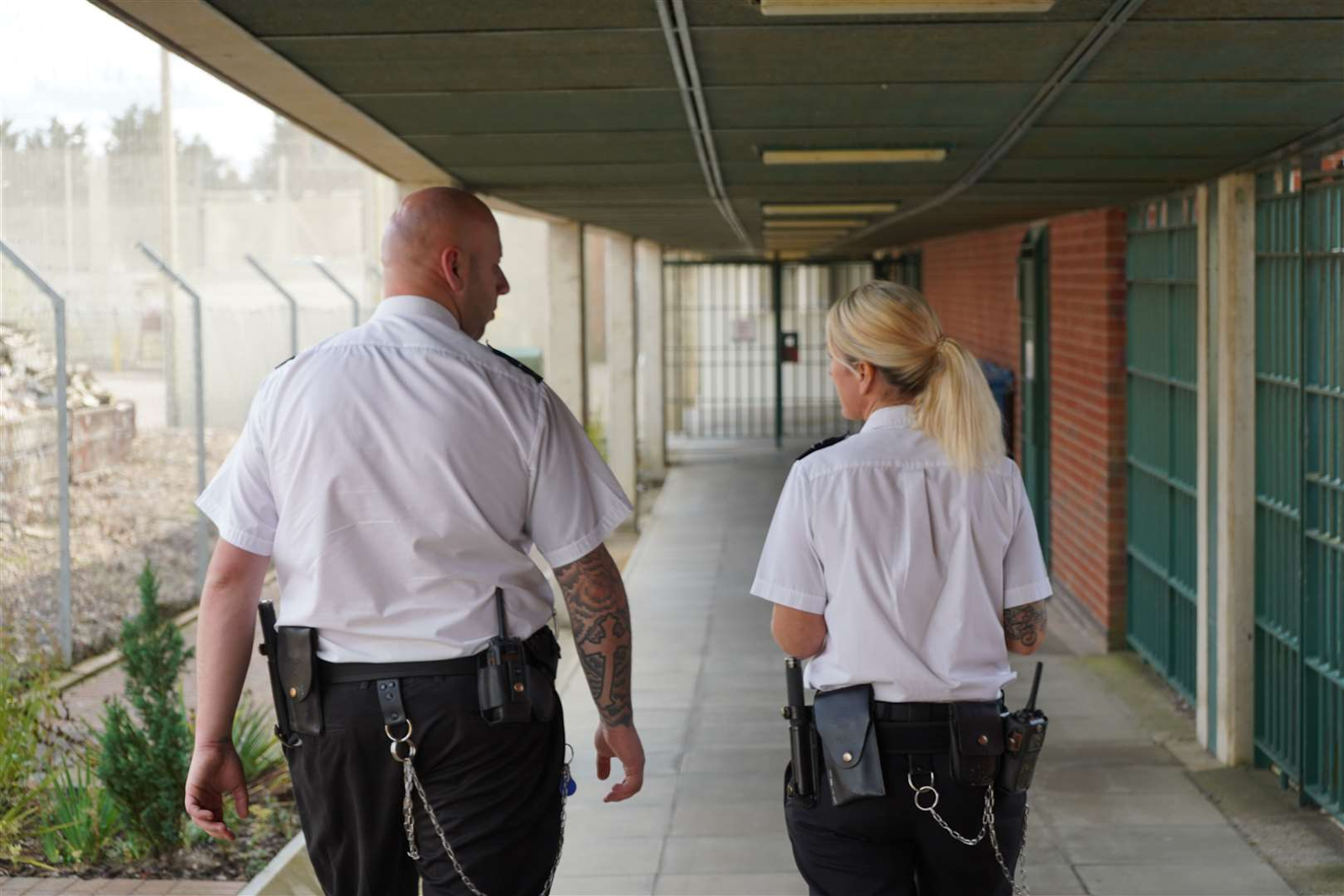
Prison Officers, the Police and Security Officer are very often well ‘tooled up’ and ready to deal with a whole range of situations that they may face.

How ‘tooled up’ are we as God’s people.

1 Peter 3.5

But dedicate your lives to Christ as Lord. Always be ready to defend your confidence [in God] when anyone asks you to explain it. However, make your defence with gentleness and respect.

And practically as well, think through what situation you might be entering and consider how you might be prepared. That might be an extra pen you could pass to someone, or even a sheet of paper, or it might be a packet of tissues or a pair of gloves, perhaps some plasters. These little things can sometimes lead to big conversations!


Sunday, 18 May 2025

'We are, therefore I am' - Weekly Reflection 18th May 2025

On Saturday last I joined in a team of volunteers from St Oswald’s (Rugby) for what was called a Haggai Day.

This was based around Haggai 1.8-9 Go up into the mountains and bring down timber and build my house, so that I may take pleasure in it and be honoured,” says the Lord. “You expected much, but see, it turned out to be little. What you brought home, I blew away. Why?” declares the Lord Almighty. “Because of my house, which remains a ruin, while each of you is busy with your own house.

The story of Haggai is about the rebuilding of the Temple after the return from exile.

At St Oswald’s we are gifted with the legacy of a building and grounds and as stewards we have a duty of care. The building and grounds serve as an icon of God’s presence.

This year the whole of the Church building is being reordered to make it fit for purpose and a multi-functional space in the 21st century.  That includes trying to reach a net-zero carbon footprint. The building will also offer valuable community space.

On Saturday our task was to bring the grounds around the Church and in the garden of the Church Centre into good order. This involved removing of waist high weeds.

I was tasked with trying to recover what I could of a rose bush that had become buried amongst the weeds.  I also set to remove other dead sapling and bushes. Trying as best as I could to remove the roots.

Fortunately, the roots I was dealing with could be removed without mechanical aid and using diggers. Just a solid mattocks and hard work.

I bought the mattocks to deal with bamboo in our garden at home. Bamboo is not easy to remove because its roots spread out wide and intertwines with other roots.

Did you know that this is how the mighty redwood roots also develop. Their roots go deep, up to 6-12 feet. But more importantly redwood tree roots intertwine and fuse with one another, creating a complex web of connections. This network allows the trees to share resources such as water, nutrients, and even information. Through this interconnectedness, redwood trees can thrive in challenging conditions and support the overall health of the forest ecosystem.

The sequoia redwood trees located in California, are some of the biggest trees in the world. The General Sherman is, in fact, noted as the largest known living single stem tree on Earth! It is 275 ft tall, 25 feet in diameter, and is approximately 2,500 years old.

Just glad I didn’t have to try and dig one of those out!

6-12 feet deep may sound a lot but when we you consider the height and the weight and the weather conditions the redwood survives it really isn’t that deep. Where it gets it strength from is the interconnectedness with other trees, like arms linked together giving each other support.

This morning, we continued exploring the theme of ‘transformation.’  Today’s story was the well-known story of the woman at the well, John chapter 4.  

That this woman was collecting water at the well at noon informs us that she was ‘outside’ the community and ostracised. That may have been for her dubious lifestyle, five husbands and now not married to the man she is living with, and that is something worth reflecting on. What circumstances had led her to this position, was this of her own making or was she the victim of male manipulation? However, or whatever it was we see her restored into the community after an encounter with Jesus she rushes off (leaving her water jar!) and tells them of Jesus.

‘I am because we are.’

On Saturday I wasn’t alone, we had a whole team of people of all ages and abilities doing whatever we could within the limits of our capabilities.

I am reminded yet again of a poem by John Donne, (1571-1631) ‘No Man is an Island.’

No man is an island,

Entire of itself;

Every man is a piece of the continent,

A part of the main.

If a clod be washed away by the sea,

Europe is the less,

As well as if a promontory were:

As well as if a manor of thy friend's

Or of thine own were.

Any man's death diminishes me,

Because I am involved in mankind.

And therefore never send to know for whom the bell tolls;

It tolls for thee.

Who are we connected to and with? Who is giving us support and who are we supporting? Is there someone we could reconnect with; someone we could bring and welcome back into the community?

Our watchword for the week is Ubuntu. Ubuntu is a word from South Africa, much loved by Desmond Tutu and Nelson Madela. It translates to, ‘a person is a person through other persons. The source of knowledge is, therefore, the community, not the individual. Therefore, we could say that for Ubuntu, ‘I am because we are’.  

To explore more of what this looks like on the ground check out 'Together for the Common Good.'

Together For The Common Good - Home


Sunday, 11 May 2025

'All shall be well' - Weekly Reflection 11th May 2025.

1964 was an eventful year -- a half-century ago, humans were making strides toward space travel beyond the Earth's orbit, and Tokyo hosted the 18th Summer Olympics. The Beatles took America by storm, as Race Riots gripped big cities -- and the Civil Rights Act of 1964 was signed into law.

And I turned thirteen on May 16th in 1964.

I mention that for two reasons. Although just two years on, at the age of fifteen, I would leave school and enter the world of work, at thirteen I remember getting a toy yellow dumper truck as one of my presents.

Last week I watched the deeply disturbing 4-part series ‘Adolescence’ streaming on Netflix.  It is not an easy watch, but one that I think we should try to engage with as it explores the complexities, the family dynamics and the societal changes and pressures on young people today. The basic plot line is of a thirteen year old schoolboy named Jamie Miller arrested after the murder of a girl in his school. 

As the story unfolds you are taken into the dark world of the internet, the increased mental anguish as young people who do not have the capacity to process issues and some of the images they can easily access and share through Instagram and other social platforms. 

I found myself exploring Incel,  a term associated with a mostly online subculture of male heterosexual people who define themselves as unable to find a romantic or sexual partner despite desiring one, and who may blame, objectify and denigrate women and girls as a result. The incel ideology is characterized by the hatred of women (misogyny) that is often expressed through hate speech or, in certain cases, violence againist women.

Interestingly I also watched ‘The Trial’ a 2025 single-episode British television drama directed by Michael Samuels from a screenplay by Mark Burt.  The drama is set in Britain in 2035 in which parents are held legally responsible for the crimes committed by their children. The drama shows teenager Teah on trial for a serious crime, putting her parents Dione and David Sinclair in the centre of a distressing legal battle against the Office of Judicial Inquisition, a powerful new division of the Ministry of Justice.

Add into this the VE 80th celebrations that for me had a sad note as Europe is not at peace but has a war raging, as it is in Gaza and Sudan and now we watch as India and Pakistan engage in armed conflict. It is reported that there are 110 armed conflicts happening across the world at this moment.


How do we, as people of Faith, navigate our way through and seek to speak into these global convulsions. What sort of conversations are we having with family, friends and neighbours. What sort of stuff are we putting up on social media and passing on, reposting, perhaps without some fact checking first.

Some I know are reading these current seismic shifts as signs of the times – the end times that is. However, I do think we need to be cautious about this reading of Scripture. We need perhaps to look back in human history and consider some of the other occasions when it appeared that all hell had broken loose.

Taking this ‘last days’ approach could lead to a sense of dismissal about current issues. If these are the last days and Jesus is returning, then what need is there to try and understand or to deal with any of the current problems. For some, who advocate that earth is not their home, they are just passing through and are on their way to heaven, this can then become an even stronger motive for dissociation from all the upheavals and all this talk and rumour of wars and famines are simply signs of the times we are living in and that are shortly to end.

In Mark 1.15 we read, The time has come,” he (Jesus) said. “The kingdom of God has come near. Repent and believe the good news!”

We then read on and discover what this kingdom of God looks like in words and in deeds.

Jesus references the words of Isaiah to denote his mission,

‘The Spirit of the Lord is upon me,
    because he has anointed me
        to bring good news to the poor.
He has sent me to proclaim release to the captives
    and recovery of sight to the blind,
        to let the oppressed go free,
19 to proclaim the year of the Lord’s favour.’

Has that mandate changed – I think not.

Therefore, I come back to my question about navigating through these changing and challenging times and speaking prophetically into these times. (Prophetically more in the tradition of forthtelling rather than foretelling)

Apart from seeking to be informed as I can be (1) while remaining alert to ‘doomscrolling’ I am also finding great help from The Bible Project. www.bibleproject.com.  Through their podcasts and other material they present the Scriptures in a way that speaks about the metanarrative of God’s redemptive purposes. Which includes a future state of a heaven earth conjoined reality. A realised Lord’s prayer. 

The other initiative I am finding very helpful, particular on the prophetic side is ‘Leaving Egypt.’ https://leavingegyptpodcast.substack.com/  This is a series of podcast interviewing leading thinkers to try and help us to navigate our way through these times of unravelling when so much that we have known and built our lives upon appear to be so much shifting sands.

Therefore, what kind of conversations might you have in the week ahead. What might you be able to do to announce and establish the kingdom of God. What might it mean to actualise ‘Your kingdom come, your will be done, upon earth as in heaven.’

As much as lies within us, let us be informed and as engaged as we are able and to speak into our turbulent times with a voice of hope. 

On May 8th we were invited to remember Mother Julian of Norwich (1342-1416) and we recall one of her most famous quotes...

 "All shall be well, and all shall be well, and all manner of thing shall be well"

Always remembering that the earth is the Lord's and everything in it...

https://youtu.be/Uz5xbqU7msE?si=rx1HdBmzlRGb4eK5


(1(1)  I find ‘The Rest is Politics’ and the ‘Rest is Politics US’ helpful in gaining insights and analysis of global issues.  


Sunday, 4 May 2025

'I see you' - Weekly Reflection 4th May 2025

Like all children our grandchildren enjoy hiding from us and a walk home from school will nearly always have at least one of the boys hiding behind a bush or a lamppost. We play along and say, have you seen James or have you seen William. Then a shout, I see you.

That phrase, I see you, has been with me a few times this week.

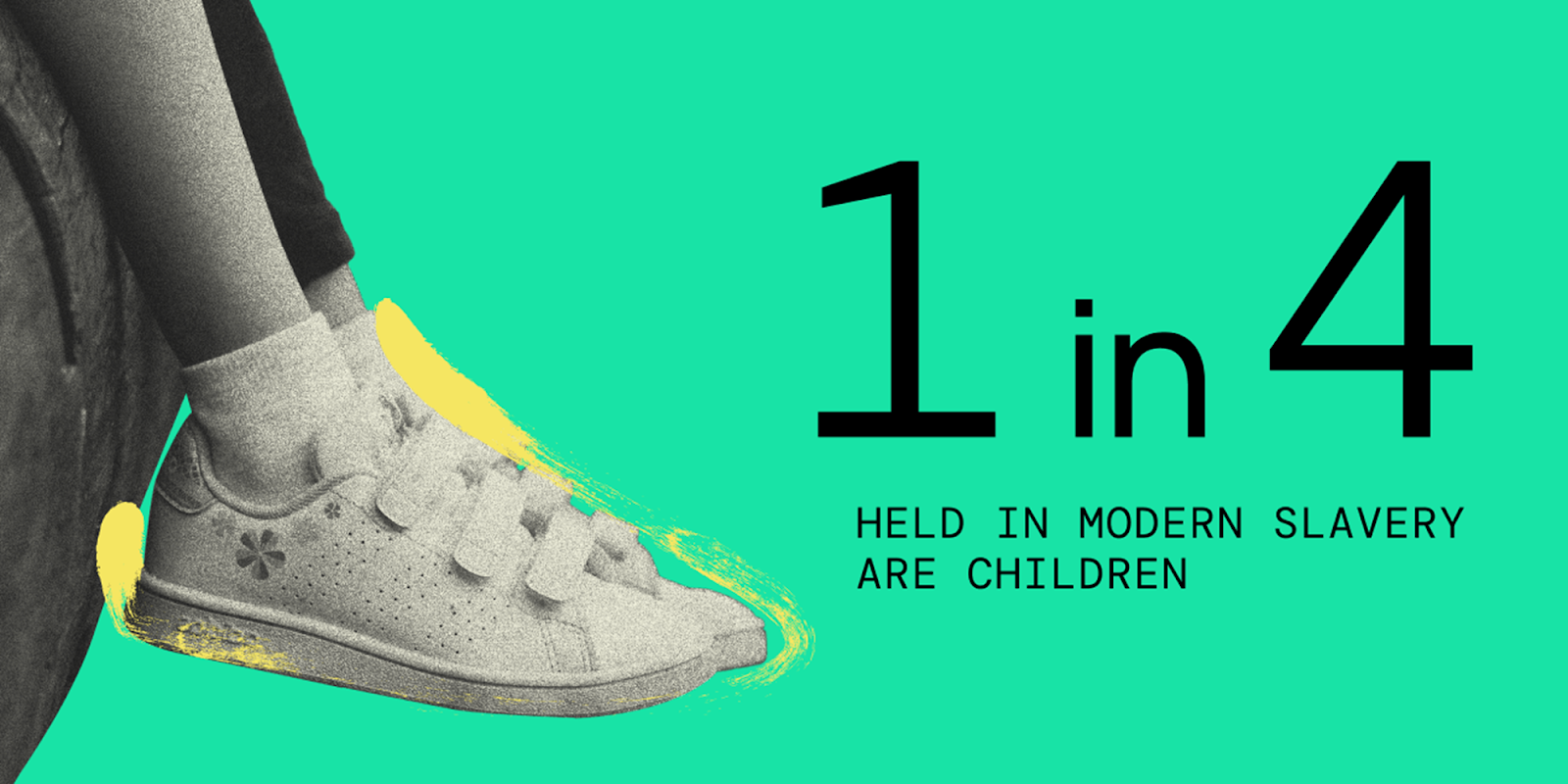
On Thursday I spoke to the Thursday Fellowship who meet every other Thursday at St Oswald’s. (This Fellowship is over 100 years old!). Mainly elderly folk who come together for a time of worship and to listen to a speaker or have some other activity.  I chose to speak to them about Modern Slavery. It is one of those topics that we know goes on, often under our noses, in our town and maybe even in our street or road. But it is so often hidden and as such we can begin to lose sight of an estimated 122,000 people, men, women and children trapped in modern slavery across the UK. Across the world an estimated 50 million people are caught up and trapped in modern slavery.

The Clewer Institute (1) have produced this powerful video that talks about the hidden nature of modern slavery and the call to ‘see you,’ to take notice and be aware if we suspect someone is being exploited in this way.

https://youtu.be/7ClMChmeq1M?si=Xg_Pjm9T2vjW0FQQ

At St Oswald’s we have begun a Sermon Series on transformation and today explored a very familiar story for anyone involved with Prison Fellowship, (2) the story of a little man who went out on a limb to see Jesus!

Zacchaeus, from Luke 19.1-10. 

Importantly in verse 5 we read, ‘And when Jesus came to the place, He looked up and saw him, and said to him, “Zacchaeus, make haste and come down, for today I must stay at your house.”

Everyone else saw a hated tax collector, a man who had become rich by exploiting and taking money off others, often those who could least afford it. They saw Zacchaeus as a tax collector who was working for Herod or even worse, the Romans. They saw someone ostracised, outside of table fellowship. They saw a sinner - in their judgement!


Jesus saw something else – he stopped – he looked – he engaged.

‘…because this man, too, is a son of Abraham.’ (v 9)

Can you think of anyone, anyone at all, whom Jesus wouldn’t see, stop, look and seek to engage with?  

Can you think of anyone, anyone at all, whom you wouldn’t see, stop, look and seek to engage with?

There may be a good reason, and security is certainly an important one. 

However, it remains a  good question to ask and as a watchword for the week….

Stop Look See Engage


1)      The Clewer Institute https://theclewerinitiative.org/

2)      The Prison Fellowship https://prisonfellowship.org.uk/

3)      Stop the Traffick - STOP THE TRAFFIK | People shouldn't be bought and sold